Discover the Versatile Power of the Reximex RPA PCP Pistol/Carbine 5.5mm (.22)
When precision, compact design, and consistent performance come together, the result is an airgun that elevates every shooting session. The Reximex RPA PCP Pistol/Carbine 5.5mm (.22) delivers exactly that combination. Designed for shooters who value accuracy, reliability, and adaptability, this regulated pre-charged pneumatic platform transforms effortlessly between a balanced pistol and a stable carbine configuration. Whether the goal is backyard plinking, formal target practice, or extended range sessions, this model stands ready to perform.
Why Choose the Reximex RPA PCP Pistol/Carbine 5.5mm (.22)?
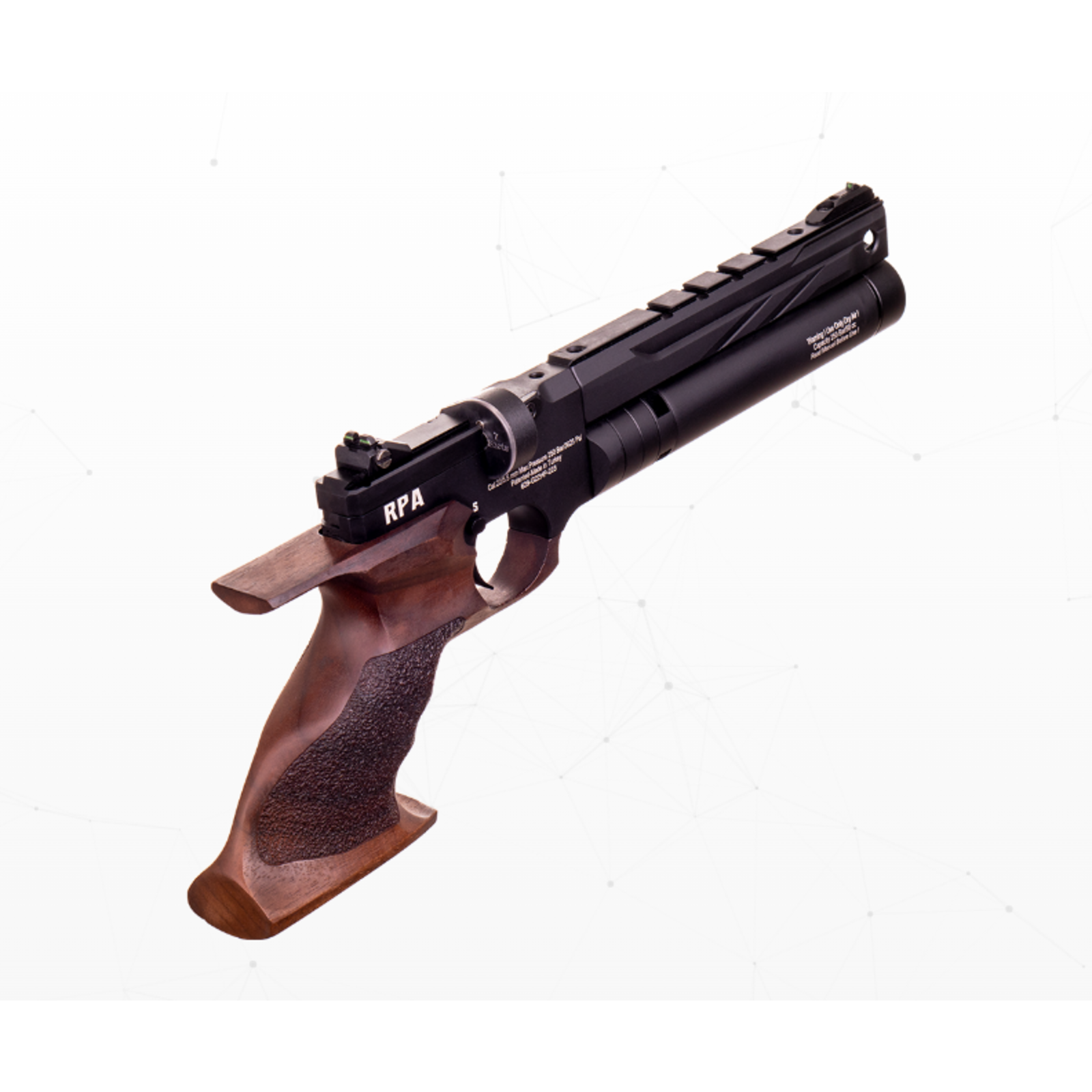
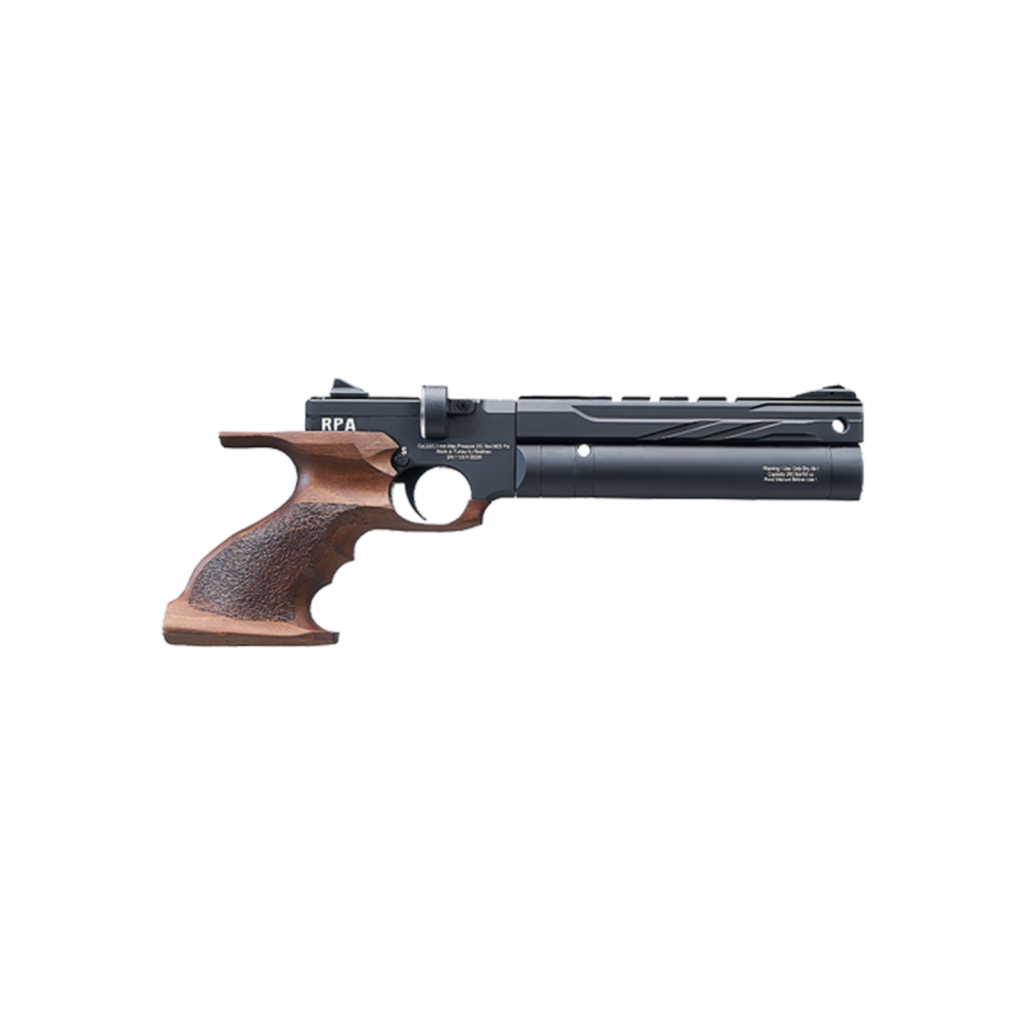
Many airguns force a choice between size and capability. The Reximex RPA PCP Pistol/Carbine 5.5mm (.22) removes that compromise. Its lightweight aluminum construction and ergonomic Turkish walnut grip create a natural point of aim that reduces fatigue during longer sessions. At the same time, the regulated air system maintains remarkably consistent velocity shot after shot, giving shooters the confidence that every pellet will travel along a predictable path.
The built-in regulator plays a central role in this reliability. By keeping chamber pressure stable across a wide fill range, the system produces a flat velocity curve that translates directly into tighter groups. Shooters can therefore focus on technique rather than compensating for power fluctuations. In addition, the 50 cc removable air cylinder fills safely to 250 bar (3,625 psi) and supplies approximately 40 consistent shots in .22 caliber when operated within the optimal pressure window.
Core Features That Set This Model Apart
The Reximex RPA PCP Pistol/Carbine 5.5mm (.22) incorporates thoughtful engineering throughout its design. A side-lever cocking mechanism, positioned on the left side, allows smooth and rapid cycling for right-handed users while remaining accessible for left-handed shooters with minimal adjustment. Fiber-optic front and rear sights provide clear aiming references in varied lighting conditions, and the 11 mm dovetail rail readily accepts red-dot sights or compact scopes for enhanced precision at longer distances.
Further practical advantages include:
- A rifled 7.9-inch (200 mm) barrel that stabilizes .22 pellets for improved accuracy
- An included ½-inch UNF threaded muzzle adapter for optional moderators
- Manual safety for secure handling between shots
- Two 7-shot rotary magazines plus a single-shot tray for flexible loading options
- Removable 50 cc aluminum air cylinder with integrated pressure gauge
- Soft carry case with custom foam cutouts for safe transport and storage
- Spare O-rings, fill probe, and detailed manual
These elements combine to create a complete package that arrives ready for immediate use. Moreover, the ergonomic grip options—including handsome Turkish walnut—ensure a secure and comfortable hold for a wide range of hand sizes, making the platform inclusive for many shooters.
Performance You Can Count On
Velocity and energy figures for the Reximex RPA PCP Pistol/Carbine 5.5mm (.22) typically reach approximately 515 fps and 10.7 foot-pounds with standard lead pellets, depending on pellet weight and local regulatory limits. Because the system is regulated, these numbers remain stable across dozens of shots rather than declining rapidly as pressure drops. Consequently, point of impact stays consistent, which is especially valuable during formal practice or when refining technique.
Transitioning from pistol to carbine configuration takes only moments with the optional detachable shoulder stock available on certain variants. Once attached, the platform gains additional stability for supported positions or longer-range work while still retaining the original compact dimensions when the stock is removed. This dual-role capability means one investment serves multiple shooting styles and environments.
Built for Everyday Enjoyment and Skill Development
Beyond raw specifications, the Reximex RPA PCP Pistol/Carbine 5.5mm (.22) encourages regular practice through its user-friendly nature. The lightweight design (approximately 1.98 lbs / 0.9 kg in pistol form) allows extended sessions without arm fatigue. Furthermore, the quiet-to-medium report—especially when a moderator is fitted—makes the airgun suitable for use in more noise-sensitive locations when local regulations permit.
Shooters of varying experience levels find the platform approachable. Newer users appreciate the straightforward side-lever action and clear fiber-optic sights, while experienced marksmen value the regulator consistency and optics-ready rail. Inclusive design choices, such as the ambidextrous grip texture and adjustable sights, help ensure that a broad range of people can enjoy accurate, satisfying shooting.
Maintenance and Longevity Considerations
Proper care extends the life of any PCP airgun, and the Reximex RPA PCP Pistol/Carbine 5.5mm (.22) is designed with serviceability in mind. The removable air cylinder simplifies filling with a hand pump, scuba tank, or compressor. Periodic inspection of O-rings and a light application of appropriate lubricant keep the side-lever and regulator operating smoothly. Because the barrel is rifled and the action is relatively simple, cleaning remains straightforward after each session or as needed based on pellet residue.
Ready for Your Next Session
Ultimately, the Reximex RPA PCP Pistol/Carbine 5.5mm (.22) offers an appealing balance of portability, consistency, and versatility. Its regulated PCP system, quality construction, and thoughtful accessories create a platform that supports both casual enjoyment and serious skill development. From the first fill to the final shot of a long string, this airgun rewards careful aim and deliberate practice.
Calibres, FAC Considerations, Power Output and Accessories for the Reximex RPA PCP Pistol/Carbine 5.5mm (.22)
Understanding the full capability of any airgun begins with a clear view of its available calibres, legal power classifications, actual performance figures and the supporting accessories that complete the package. The Reximex RPA PCP Pistol/Carbine 5.5mm (.22) is offered in configurations that suit a wide spectrum of shooters, from recreational target enthusiasts to those seeking higher-output FAC-rated performance. This section explores each of these elements in detail so that every potential user can make an informed decision that matches their needs, local regulations and preferred style of shooting.
Available Calibres and Their Practical Differences
The Reximex RPA PCP Pistol/Carbine 5.5mm (.22) platform is primarily associated with the popular .22 (5.5 mm) calibre, yet it is also manufactured in .177 (4.5 mm). Each calibre brings distinct ballistic characteristics that influence trajectory, energy transfer and suitable applications.
In .22 calibre the heavier pellets retain energy more effectively downrange and exhibit reduced wind drift compared with lighter .177 projectiles. This makes the 5.5 mm option especially appealing for longer-distance target work and for situations where a more substantial impact is desired. Typical magazine capacity in .22 is seven rounds for the standard pistol magazines, with larger-capacity rifle-style magazines available on certain carbine packages.
By contrast, the .177 version prioritises flatter trajectories and higher pellet counts per fill. Magazines hold nine rounds in pistol form, rising further when rifle magazines are supplied. Shooters who value rapid follow-up shots or who practise extensively at shorter ranges often prefer this lighter calibre. Because both versions share the same regulated 50 cc cylinder, side-lever action and overall architecture, changing between them is largely a matter of selecting the appropriate barrel and magazine set rather than learning an entirely new platform.
The choice between calibres is therefore inclusive of different skill levels and shooting goals. Beginners frequently start with .177 for its forgiving trajectory, while more experienced marksmen may favour the .22 for its greater down-range authority. Either way, the Reximex RPA PCP Pistol/Carbine 5.5mm (.22) remains the core reference point for the higher-impact option within the family.
FAC Status and Legal Power Classifications
Power output and legal status vary by jurisdiction, and the term FAC (Firearms Certificate) is particularly relevant in the United Kingdom. In the UK, airguns delivering more than 12 foot-pounds of muzzle energy in rifle form, or six foot-pounds in pistol form, require an FAC. Many export and domestic versions of the Reximex platform are deliberately limited to remain below these thresholds, allowing purchase and use without additional certification.
However, FAC-rated variants of the Reximex RPA PCP Pistol/Carbine 5.5mm (.22) are available in markets where higher power is permitted. These versions can approach or exceed 20 joules (approximately 14.7 foot-pounds) depending on pellet weight and regulator setting. Prospective owners must therefore verify the exact specification of the model they intend to purchase against local legislation. Responsible retailers clearly label FAC and non-FAC examples, and the manufacturer’s documentation supplies the necessary chronograph data.
Outside the UK the same principle applies: always confirm that the power level of the chosen Reximex RPA PCP Pistol/Carbine 5.5mm (.22) complies with national or regional limits before taking delivery. Inclusive practice means ensuring that every shooter, regardless of location or experience, can obtain a legally compliant example that still delivers the accuracy and consistency for which the platform is known.
Power Delivery and Consistency
At the heart of the Reximex RPA PCP Pistol/Carbine 5.5mm (.22) lies a regulated pre-charged pneumatic system that prioritises shot-to-shot consistency. In standard .22 configuration the airgun typically produces around 515 feet per second and approximately 10.7 foot-pounds (roughly 14.5 joules) with common 18-grain pellets. FAC versions can be tuned higher, sometimes reaching 20 joules while still benefiting from the internal regulator.
The regulator maintains a near-constant pressure behind each pellet across a substantial portion of the fill, resulting in a flat velocity curve. Consequently, the first forty or so shots in .22 calibre remain within a tight velocity band when the cylinder is filled to 250 bar and allowed to fall to around 100 bar. This consistency translates directly into predictable point of impact and tighter groups, whether the airgun is used as a pistol or fitted with the optional shoulder stock as a compact carbine.
Because the 50 cc aluminium cylinder is fully removable, shooters can prepare multiple cylinders in advance or swap them quickly at the range. The integrated pressure gauge at the front of the cylinder allows continuous monitoring, so the user always knows when a refill is approaching. These design choices ensure that power remains both usable and reliable throughout a session.
Comprehensive Accessories Package
Every Reximex RPA PCP Pistol/Carbine 5.5mm (.22) arrives with a thoughtfully selected set of accessories that enable immediate use and long-term enjoyment. Standard inclusions typically comprise:
- A soft zippered carry case with precision-cut foam that protects the airgun and organises magazines, fill probe and spare parts
- Two rotary magazines matched to the chosen calibre (seven-shot for .22, nine-shot for .177)
- One single-shot tray for precision loading or testing different pellets
- Male and female fill probes compatible with common PCP filling systems
- A ½-inch UNF threaded muzzle adapter for attaching moderators or other muzzle devices
- Spare O-rings for routine maintenance
- A clear, illustrated owner’s manual
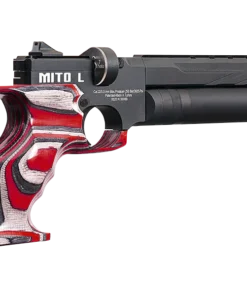
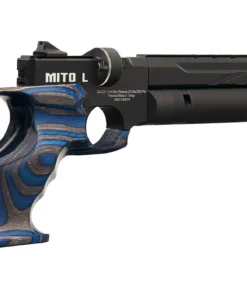
Optional and aftermarket items further expand versatility. Detachable shoulder stocks convert the pistol into a stable carbine, while alternative grips—Turkish walnut, orange laminated or blue laminated—allow personalisation of both appearance and feel. The 11 mm dovetail rail accepts a wide range of red-dot sights and compact scopes, and additional cylinders or higher-capacity magazines are readily available from authorised dealers.
Taken together, the calibre options, FAC-compliant and higher-power variants, regulated power delivery and complete accessory suite make the Reximex RPA PCP Pistol/Carbine 5.5mm (.22) a thoroughly equipped platform. Shooters can therefore select the exact combination of power, legal status and supporting equipment that best matches their requirements, confident that the underlying engineering remains consistent across the range.
Weihrauch Precision Air Rifles, PCP Platforms and Premium German Airgun Engineering
The Weihrauch HW100X Karbine is a premium Thumbhole PCP Air Rifle engineered for shooters who value accuracy, refined handling and dependable German manufacturing. Weihrauch has developed a strong reputation for producing accurate air rifles, from traditional spring-powered models such as the HW35, HW97K and Weihrauch HW77 air rifle to advanced pre-charged pneumatic platforms such as the HW100 and Weihrauch HW44.
Anyone researching what are air rifles should understand that modern airguns are available in several operating systems. These include spring piston, pneumatic, CO₂ and PCP designs. Spring-powered models use a mechanical piston to compress air, while compressed air rifles store pressurized air inside a cylinder. Both systems can provide excellent performance when manufactured to high standards.
Weihrauch HW77 Green Laminate Rifle
The HW77 Green Laminate rifle combines classic underlever engineering with a distinctive laminated stock. As a Weihrauch underlever air rifle, it uses a fixed barrel and separate underlever cocking mechanism, helping maintain consistent barrel alignment and dependable shot placement.
The HW77 spring piston air rifle is designed for target shooting, recreational use and lawful outdoor applications. Shooters searching for a German precision air rifle, precision shooting airgun or one of the best Weihrauch air rifles frequently consider the HW77 because of its solid construction, balanced stock and predictable firing cycle.
A detailed Weihrauch HW77 accuracy review usually focuses on its fixed-barrel configuration, quality trigger system and stable shooting characteristics. These qualities make it a strong candidate for anyone seeking the most accurate air rifle for target shooting, an air rifle with low recoil, a durable air rifle for outdoor use or a reliable air rifle for long term use.
Customers researching Weihrauch HW77 Green Laminate price and specs should compare the available calibre, legal power rating, stock finish, overall length, weight, sight configuration and included accessories. Availability may differ by region, so searches such as Weihrauch HW77 for sale, best price Weihrauch HW77, where to buy Weihrauch HW77, Weihrauch HW77 in stock and buy Weihrauch HW77 Green Laminate online should always be completed through lawful, licensed and reputable channels.
HW77 Green Laminate vs HW97 Comparison
The HW77 Green Laminate vs HW97 comparison is important because both rifles use proven underlever systems, yet they are configured for slightly different shooting preferences. The HW77 is traditionally associated with open-sight capability and classic styling, while the HW97K is commonly configured as a scope-oriented target rifle.
When considering Weihrauch HW77 vs HW97, the decision may depend on stock shape, barrel length, balance, optics preference and intended shooting position. Both are frequently described as a top rated underlever air rifle, while the right choice depends on the individual shooter.
The HW77 vs break barrel air rifle comparison also highlights the advantages of a fixed-barrel design. A break-barrel rifle uses the barrel as the cocking lever, whereas the HW77 uses a separate underlever. Both systems can be accurate, but many precision shooters appreciate the mechanical consistency of the fixed barrel.
People asking is Weihrauch HW77 good for beginners should consider the rifle’s weight, cocking effort and intended power level. It can be an excellent platform for learning disciplined shooting technique, although younger or smaller shooters may prefer a lighter model such as the Weihrauch HW30, HW30S, HW 30 or Weihrauch HW 30.
Weihrauch Spring-Piston Rifle Range
Weihrauch produces several respected spring-powered models. The classic HW35 air rifle and HW35E for sale searches remain popular among enthusiasts who appreciate traditional construction. The HW50, HW50 S, HW50 s, Weihrauch HW50, Weihrauch HW50S and Weihrauch HW50s offer a useful balance between manageable size and practical performance.
The Weihrauch HW80, Weihrauch HW 95, Weihrauch HW95, HW98, Weihrauch HW98, HW 98, Weihrauch HW90, HW97K, HW 97K and HW77 air rifle represent additional choices for shooters comparing different actions, stock designs and power levels. Compact options such as the HW 70, HW70, HW 30 and Weihrauch HW30 may appeal to users who prefer lighter and more manageable equipment.
These rifles demonstrate why Weihrauch is regularly included in discussions about high quality German airguns, dependable air rifle makes, premium German air rifle manufacturing and the search for an affordable premium air rifle.
Weihrauch PCP Air Rifles
The Weihrauch HW100 is one of the company’s best-known PCP platforms. Searches for HW100 airgun, HW100 airgun, Weihrauch HW100, HW100 and the Weihrauch HW100X Karbine reflect the rifle’s popularity among shooters who prefer regulated compressed-air performance, smooth cycling and magazine-fed operation.
A PCP system can offer a lighter firing cycle than a conventional spring-powered platform because it does not rely on a large internal piston moving during the shot. This makes the HW100 appealing to users searching for accurate air guns, a premium air gun, a refined pellet rifle or an alternative to a traditional BB gun.
Weihrauch Air Pistols
People researching what are air pistols will find that Weihrauch produces both spring-powered and PCP models. The Weihrauch HW45, H 45, HW40, HW 40, Weihrauch HW44, HW 44 and Weihrauch HW44 cover different shooting preferences.
The HW45 uses a spring-piston system and is known for its substantial construction, while the HW40 is a pneumatic target-style pistol. The HW44 is a PCP pistol designed for controlled handling and consistent performance. These models are frequently compared with other air pistols, recreational airguns and specialized target equipment.
International buyers may also encounter phrases such as Weihrauch English, Weihrauch Englisch, rifles de aire and yivli av tüfeği while researching specifications, translated manuals and regional product classifications.
Reximex PCP Airguns
Shooters comparing Weihrauch with other PCP manufacturers may also research Reximex airguns. The Reximex range includes the Reximex RP, Reximex RPA, Reximex Mito, Reximex Mitos, Reximex Lieva, Reximex Accura PCP air rifle, Reximex Throne Gen 2, Reximex Throne Gen2 and SBS12.
The terms Reximex airguns, Reximex RP, Reximex RPA, Reximex RPA and Reximex Throne Gen 2 are commonly used by buyers comparing compact pistols, bullpup rifles and conventional PCP configurations. Buyers should evaluate regulator design, air-cylinder capacity, magazine system, trigger adjustment, calibre, legal energy limits and service support.
Understanding Airgun Energy and Performance
An FPS to joules calculator, FPS to ft lbs converter or general airgun calculator can help shooters understand the relationship between projectile weight, velocity and muzzle energy. Velocity alone does not determine performance because a heavier pellet travelling at the same speed carries more energy than a lighter one.
Energy calculations should be verified using accurate chronograph data and the correct pellet weight. Shooters must also ensure that their equipment complies with local licensing, power and ownership regulations.
Online research platforms and search terms such as Gunseek, airgun comparison tools and manufacturer specification pages may help users compare models. However, technical claims should always be confirmed through official documentation or a qualified airgun specialist.
FX Impact M3 PCP Air Rifle
Another advanced platform frequently compared with the Weihrauch HW100 is the FX Impact M3 .22cal air rifle. 600mm barrel configuration. The FX Impact M3, FX Impact MK3, FX M3 airgun, FX M3, Impact M3 and FX Impact M3 air rifle are associated with a modular PCP design offering extensive adjustment possibilities.
International shoppers often search for FX Impact M3 precio, FX Impact M3 precio en USA and FX Impact M3 price when comparing regional availability. Final pricing may depend on calibre, barrel system, stock configuration, accessories, taxes, shipping restrictions and legal requirements.
The FX platform is generally aimed at experienced shooters who understand regulator settings, projectile selection and safe airgun tuning. The Weihrauch HW100, by comparison, is often chosen for its refined factory setup and straightforward operation.
Choosing the Right Air Rifle
The correct rifle depends on the shooter’s experience, intended application, preferred operating system and local regulations. A traditional spring-powered Weihrauch may appeal to buyers who want mechanical simplicity, while the HW100 suits users seeking the smooth performance of compressed air rifles.
The HW77 remains a strong option for target shooters who prefer a fixed-barrel spring piston system. The HW97K offers a dedicated scope-oriented design, while the HW30 and HW50 families provide lighter alternatives. PCP shooters may compare the HW100 with Reximex models or the FX Impact M3.
Whether researching a German air rifle, air shot gun, SK X rifles, air guns, a modern pellet rifle or a recreational BB gun, buyers should prioritize safe handling, correct storage, appropriate eye protection and compliance with all applicable laws. Every airgun should be treated as a potentially dangerous projectile-launching device and used only in a secure, lawful environment.
Frequently Asked Questions about the Reximex RPA PCP Pistol/Carbine 5.5mm (.22)
What exactly is this airgun and who is it designed for?
This regulated pre-charged pneumatic platform combines the handling of a compact pistol with the option to convert into a short carbine. It is engineered for shooters who want consistent accuracy, manageable weight and genuine versatility in one package. People who enjoy plinking in the garden, formal target practice at the club, or informal skill-building sessions will find it particularly rewarding. Because the design prioritises ergonomics and shot-to-shot consistency, it welcomes both newcomers who are taking their first steps into PCP airguns and experienced marksmen who appreciate a refined, reliable tool.
Which calibres are available and how do they differ in practice?
The platform is offered in both .177 (4.5 mm) and .22 (5.5 mm). The .22 version is the one most frequently chosen when a little more down-range energy and reduced wind sensitivity are desired. Heavier pellets in this calibre hold their velocity better over distance and deliver a more authoritative impact on targets. Magazine capacity is typically seven rounds in the standard rotary magazines.
The .177 option produces a flatter trajectory and a higher number of shots per fill, making it attractive for high-volume practice or when maximum pellet count is preferred. Nine-round magazines are standard in this calibre. Both versions share the same regulated air system, side-lever action and overall architecture, so the choice is largely a matter of personal preference and intended use rather than a fundamental change in handling.
How much power does the .22 version deliver?
In standard configuration the .22 model usually generates around 515 feet per second and approximately 10.7 foot-pounds (roughly 14.5 joules) with common mid-weight pellets. Some markets receive higher-output versions that can approach or exceed 20 joules when local regulations allow. Because an internal regulator maintains nearly constant pressure behind each pellet for a substantial portion of the fill, the velocity remains remarkably stable across dozens of shots. This consistency is one of the platform’s strongest practical advantages: point of impact does not wander as the cylinder pressure declines, so groups stay tight from the first shot to the last usable one.
Does this airgun require a Firearms Certificate (FAC)?
In the United Kingdom the legal threshold is six foot-pounds for pistols and twelve foot-pounds for rifles. Many examples of this model are deliberately limited so they remain below those limits and can be purchased and used without an FAC. Higher-powered variants that exceed the thresholds are available in certain markets and do require the appropriate certificate. Prospective owners should always confirm the exact power rating of the specific unit they intend to buy and check current national or regional legislation. Responsible retailers clearly identify FAC and non-FAC versions, and the accompanying documentation provides chronograph data for verification.
How many consistent shots can be expected from one fill?
When the 50 cc aluminium cylinder is filled to 250 bar and the airgun is shot within the regulator’s optimal window (down to roughly 100 bar), approximately forty usable shots are typical in .22 calibre. The .177 version usually yields a higher count, often around fifty-five shots under the same conditions. These figures refer to the regulated portion of the shot string where velocity remains stable. Once pressure falls below the regulator’s set point, velocity begins to drop and groups open, signalling that a refill is advisable. The integrated pressure gauge on the front of the cylinder makes it easy to monitor remaining air at a glance.
What accessories are included with the airgun?
A complete starter package normally accompanies every unit. Expect a soft zippered case with precision-cut foam, two calibre-matched rotary magazines, a single-shot tray for precision loading or pellet testing, male and female fill probes, a half-inch UNF threaded muzzle adapter, spare O-rings and a clear illustrated manual. Some packages also include a larger-capacity rifle-style magazine. Optional extras such as a detachable shoulder stock, alternative grip panels (Turkish walnut or coloured laminates) and additional cylinders can be added later to expand capability or personalise the feel.
How is the air cylinder filled and is it removable?
The 50 cc aluminium cylinder is fully removable, which simplifies both filling and storage. It can be charged with a dedicated PCP hand pump, a scuba tank fitted with the correct adaptor, or an electric compressor. The supplied fill probe connects securely to the cylinder valve. Because the cylinder detaches, multiple cylinders can be pre-filled and swapped at the range for uninterrupted shooting. Always follow the manufacturer’s recommended maximum pressure of 250 bar and never exceed it. Regular visual inspection of the cylinder and valve area is good practice.
Can optics be mounted and what sights are fitted as standard?
Fibre-optic front and rear sights are fitted as standard, providing a clear aiming picture in most lighting conditions. The front sight is adjustable for elevation and the rear for windage. An 11 mm dovetail rail runs along the top of the action and accepts a wide range of red-dot sights, compact pistol scopes or traditional rifle scopes with appropriate mounts. When the optional shoulder stock is attached, many shooters prefer to add an optic because the iron sights may become less practical. The rail height and length accommodate most common mounting solutions without difficulty.
Is it possible to convert the pistol into a carbine?
Yes. Certain versions are supplied with, or can accept, a quickly detachable shoulder stock. Once fitted, the overall length increases to roughly 24 inches and the platform gains the stability of a short carbine while retaining the original pistol grip. Removal of the stock returns the airgun to its compact 13-inch pistol dimensions in seconds. This dual-role capability is one of the most appreciated features: the same airgun can be used for close-range pistol work one day and longer-range supported shooting the next.
How does the side-lever action work and is it suitable for left-handed shooters?
Cocking is performed by a side lever located on the left side of the action. The stroke is short, smooth and relatively quiet. Right-handed shooters find the motion natural and efficient. Left-handed users can operate the lever by tilting the airgun slightly or by breaking their grip momentarily; many left-handers report that the system remains perfectly usable after a short familiarisation period. The trigger is typically two-stage and adjustable on many examples, allowing further refinement of the release.
What maintenance does the airgun require?
Routine care is straightforward. After each session, wipe the exterior with a soft cloth and check the O-rings for signs of wear. A light application of suitable silicone oil on the probe and cylinder seals keeps the filling system smooth. The rifled barrel benefits from occasional cleaning with a soft pull-through or felt pellets when accuracy begins to decline. Because the action is relatively simple and the regulator is sealed, major servicing is rarely needed if the airgun is kept clean and not over-pressurised. Always store the cylinder with a small residual pressure rather than completely empty.
Is this airgun suitable for beginners?
Absolutely. The combination of light weight (approximately two pounds in pistol form), manageable recoil, consistent velocity and clear fibre-optic sights makes it an excellent introduction to regulated PCP shooting. New users can concentrate on sight alignment, trigger control and breathing without fighting power fluctuations or heavy spring recoil. At the same time, the platform has enough refinement and upgrade potential to remain satisfying as skills progress. Inclusive design elements such as the ergonomic grip texture and adjustable sights help ensure that people of different hand sizes and physical strengths can handle the airgun comfortably.
How loud is the report and can it be moderated?
Without additional equipment the report is rated medium. The supplied half-inch UNF adapter allows the fitting of a suitable moderator or silencer where local laws permit. Adding a moderator noticeably reduces the sound signature, making the airgun more neighbour-friendly for garden use and more pleasant during extended range sessions. Always confirm that any muzzle device complies with applicable regulations before installation.
What is the overall length and weight?
In pure pistol configuration the overall length is approximately 13 inches (330 mm) and the weight is about 1.98 pounds (0.9 kg). With the optional shoulder stock attached, length increases to roughly 23.6–24 inches and weight rises modestly to around 2.2–2.4 pounds depending on the exact stock fitted. These compact dimensions make the airgun easy to transport and comfortable to hold for extended periods.
Are spare parts and additional magazines readily available?
Yes. Authorised dealers stock replacement O-rings, extra cylinders, additional rotary magazines in both calibres, single-shot trays and grip panels. Because the design is modular, most wear items can be replaced by the owner without specialised tools. Keeping a spare cylinder and a couple of extra magazines on hand maximises range time and minimises interruption.
Final thoughts on ownership
Taken together, the combination of regulated consistency, dual-calibre availability, legal flexibility, thoughtful accessories and genuine pistol-to-carbine versatility makes this platform a highly practical choice for a wide range of shooters. Whether the priority is compact handling, extended shot strings, optics readiness or the ability to adapt the airgun to different shooting styles, the design answers those needs without unnecessary complexity. Careful attention to local regulations, proper filling technique and basic maintenance will ensure many years of accurate and enjoyable use.
Practical Use Scenarios for Everyday Shooting Enjoyment
Starting the Day with Confident Backyard Sessions
Many owners discover the true character of this regulated platform during quiet morning or evening sessions in a private garden or secure backyard range. The compact 13-inch overall length and sub-two-pound weight make it easy to carry from the house to a designated safe area without fatigue. Once the 50 cc cylinder has been filled to 250 bar, the airgun is ready to deliver approximately forty consistent shots in .22 calibre before velocity begins to taper.
Because the internal regulator keeps chamber pressure stable, the first magazine of seven pellets typically groups tightly at 15 to 25 yards even when fired from a simple standing or seated position. Fibre-optic sights pick up ambient light effectively, so early-morning or late-afternoon conditions rarely hinder clear aiming. Shooters who prefer optics simply slide a compact red-dot or low-magnification scope onto the 11 mm dovetail rail and continue without interruption.
The moderate report, especially when a moderator is fitted via the supplied half-inch UNF adapter, remains considerate of neighbours. This combination of quiet operation, predictable power and light handling encourages longer practice periods than heavier or more inconsistent airguns often allow. Over successive sessions the shooter develops a natural rhythm of loading, cocking the left-side lever, settling the grip and releasing the shot—skills that transfer directly to more formal environments.
Developing Precision at the Club or Formal Range
When the setting shifts to an organised club range, the same platform reveals additional strengths. Many clubs offer 10-metre, 25-yard or 50-yard lanes suited to both pistol and short-carbine configurations. Attaching the optional detachable shoulder stock transforms the airgun into a stable mini-carbine roughly 24 inches long. The added support reduces wobble, allowing the shooter to explore finer hold techniques and breathing control while still benefiting from the regulated velocity curve.
At these distances the .22 calibre’s heavier pellets show their advantage: they resist light cross-winds better than lighter projectiles and retain sufficient energy to produce clear impacts on paper or reactive targets. Because point of impact remains consistent across the regulated shot string, adjustments to sight or scope zero stay valid from the first shot of a fill to the last usable one. Shooters can therefore focus on technique rather than constantly compensating for power drop-off.
Inclusive design elements further enhance the experience. The ergonomic grip texture accommodates a wide range of hand sizes, and the adjustable fibre-optic sights or easy-to-mount optics ensure that people of differing visual needs can participate fully. New club members often appreciate the straightforward side-lever action and manual safety, while more experienced participants value the ability to refine trigger feel and experiment with different pellet weights without fighting the airgun itself.
Skill-Building Progressions for Growing Confidence
A practical progression that many owners follow begins with short-range familiarisation and gradually extends distance and complexity. The first sessions might concentrate on achieving a consistent five-shot group at 10 metres using the iron sights from a rested position. Once that foundation feels solid, the same exercise is repeated standing, then kneeling, then with the shoulder stock attached. Each stage reinforces the relationship between body position, grip pressure and trigger release.
Because the platform produces very little recoil and maintains stable velocity, feedback is immediate and honest. A high shot is almost always the result of an inconsistent hold or rushed trigger press rather than a random power fluctuation. This clarity accelerates learning. Over weeks of regular practice the shooter can introduce timed strings, reactive targets or simple course-of-fire drills that simulate more dynamic scenarios while remaining entirely within recreational bounds.
Families or groups of friends often share the same airgun across a single fill. The light weight and manageable dimensions mean that younger or smaller-framed shooters can handle it comfortably under appropriate supervision, while more experienced participants still find the performance satisfying. Inclusive language and shared ownership of safety rules help everyone feel welcome and responsible.
Adapting the Platform for Different Shooting Styles in One Afternoon
One of the most appreciated practical advantages is the speed with which the airgun can change roles. A morning spent practising pure pistol technique at close range can transition, after a short break, into longer-range carbine work simply by clipping on the shoulder stock and, if desired, mounting an optic. The same cylinder, magazines and pellets continue to serve both configurations, so there is no need to switch equipment or re-zero extensively.
This flexibility also supports travel or multi-location days. The soft padded case with custom foam cut-outs protects the airgun, spare magazines, fill probe and optional stock during car journeys to a club or private land. Upon arrival the cylinder can be topped up if necessary, the stock attached or removed according to the day’s plan, and shooting can begin within minutes. Because the airgun remains compact even with the stock fitted, storage in a vehicle or locker is straightforward.
Extended Practice Without Constant Refilling
The regulated 50 cc cylinder and approximately forty consistent shots in .22 calibre allow meaningful practice blocks without frequent interruptions. A typical session might involve three or four full magazines of careful grouping work, interspersed with a few single-shot precision attempts using the supplied tray. Only after that volume of shooting does the pressure gauge indicate that a refill is approaching. Owners who keep a second pre-filled cylinder on hand can simply swap units and continue, effectively doubling the usable time before needing a compressor or pump.
This efficiency is especially valuable for shooters with limited range access or busy schedules. A focused ninety-minute session can deliver more high-quality repetitions than a longer outing with an inconsistent or lower-capacity airgun. Over months the accumulated practice translates into tighter groups, more confident trigger control and a deeper understanding of how different pellets perform in the specific barrel.
Quiet, Considerate Use in Noise-Sensitive Environments
In suburban or semi-rural settings where noise can be a concern, the ability to fit a moderator transforms the practical usability of the platform. The factory-threaded muzzle adapter accepts a wide range of suitable devices, reducing the report to a level that is far less likely to disturb neighbours or wildlife. Combined with the already moderate mechanical noise of the side-lever and the soft “crack” of a regulated PCP, the moderated airgun becomes suitable for more frequent home use when local bylaws and safety conditions permit.
Shooters who value discretion appreciate that they can maintain regular practice without drawing undue attention. The same quiet operation also benefits group sessions: conversation and coaching can continue without raised voices competing against a loud report.
Building Long-Term Habits and Shared Enjoyment
Over time the platform often becomes a regular companion rather than an occasional tool. Its light weight encourages owners to take it out more frequently, while the consistent performance rewards that regularity with measurable improvement. Some shooters keep a simple log of group sizes, pellet brands and weather conditions, using the stable velocity baseline to isolate variables in their own technique. Others simply enjoy the meditative rhythm of careful loading, aiming and releasing without the need for constant mechanical adjustment.
Because the design is inclusive of different physical strengths and experience levels, it readily supports shared use among partners, friends or family members. Clear safety routines—always treating the airgun as if it is loaded, keeping the muzzle in a safe direction, and verifying the backstop—become shared habits that enhance everyone’s confidence. The modular nature of magazines, cylinders and the optional stock further allows each participant to configure the airgun briefly to their preference before handing it on.
Practical Takeaways for Daily Ownership
In everyday use the combination of compact dimensions, regulated consistency, dual-role capability and thoughtful accessories removes many of the common frustrations associated with airgun practice. Filling is simple, shot count is predictable, optics mounting is straightforward, and the transition between pistol and carbine formats takes only moments. These qualities encourage more frequent, higher-quality sessions whether the setting is a private garden, a formal club range or a temporary safe area on private land.



Reviews
There are no reviews yet.